
Bay Area Sikh Wedding Planning and Beyond
The San Jose Gurdwara, established in 1986, is a beloved spiritual and cultural hub for the Sikh community, making it one of the most popular wedding venues in the Bay Area. Known for its beautiful architecture and serene atmosphere, the Gurdwara provides a sacred setting for couples to begin their journey together. Its commitment to community service and cultural preservation adds to the significance of hosting a wedding here. So many of our weddings are held here, and very many are Sikh Fusion Weddings.
A typical Sikh wedding at the San Jose Gurdwara begins with the Anand Karaj ceremony, where the couple unites in a spiritually enriching environment surrounded by family and loved ones. Before the wedding, the Maiyan ritual is performed, in which the couple is blessed with turmeric and oil to prepare for the celebrations. This is followed by the Mehndi ceremony, where intricate henna designs are applied, allowing for personal expression and connection to tradition.
Next, the Sangeet and Jaggo celebrations create a lively, festive atmosphere filled with music, dance, and vibrant energy, celebrating the couple’s love and cultural heritage. Finally, the ceremony culminates in a grand reception that brings everyone together for an elegant event featuring delicious cuisine, entertainment, and heartfelt speeches.
Since 2014, we have had the joy of planning Sikh Weddings, and we learn something new from each couple and their families. In addition to our portfolio of Sikh Fusion Weddings, you’ll find more details of traditions and rituals below. Contact us HERE to schedule a complimentary consultation. We would love to hear from you!
Pre-Events
Kurmai is the engagement ceremony preceding a Sikh wedding. It involves a family tradition of performing the Akhand Paath (the continuous reading of the Guru Granth Sahib), after which the wedding date is decided, and families exchange gifts. The couple also exchanges rings during this meaningful ceremony.
Chunni Chadai takes place when a family member of one partner visits the other partner’s family. The parent of the receiving partner symbolically places a chunni (scarf) over their head, representing acceptance. The couple is then presented with traditional clothing and jewelry.
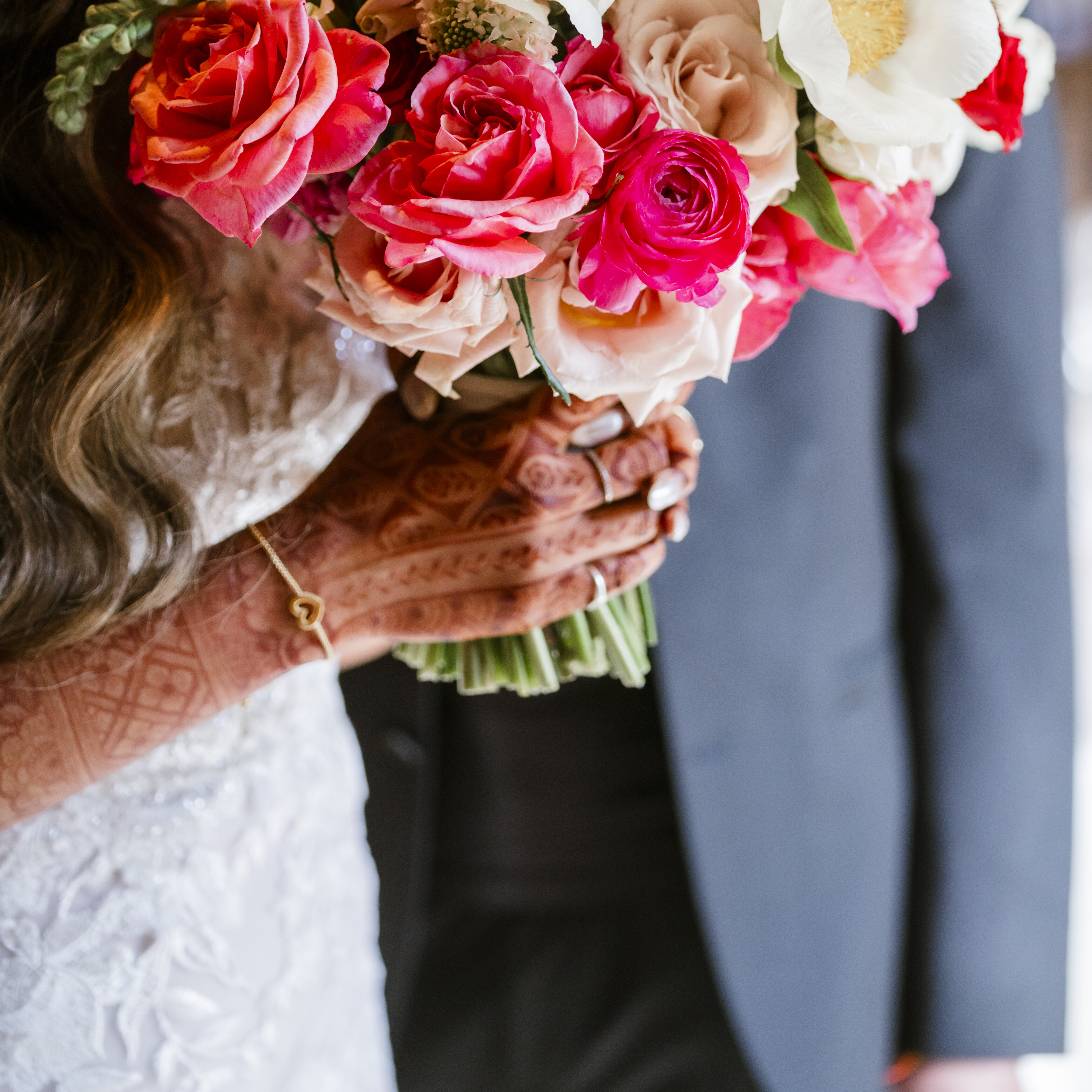
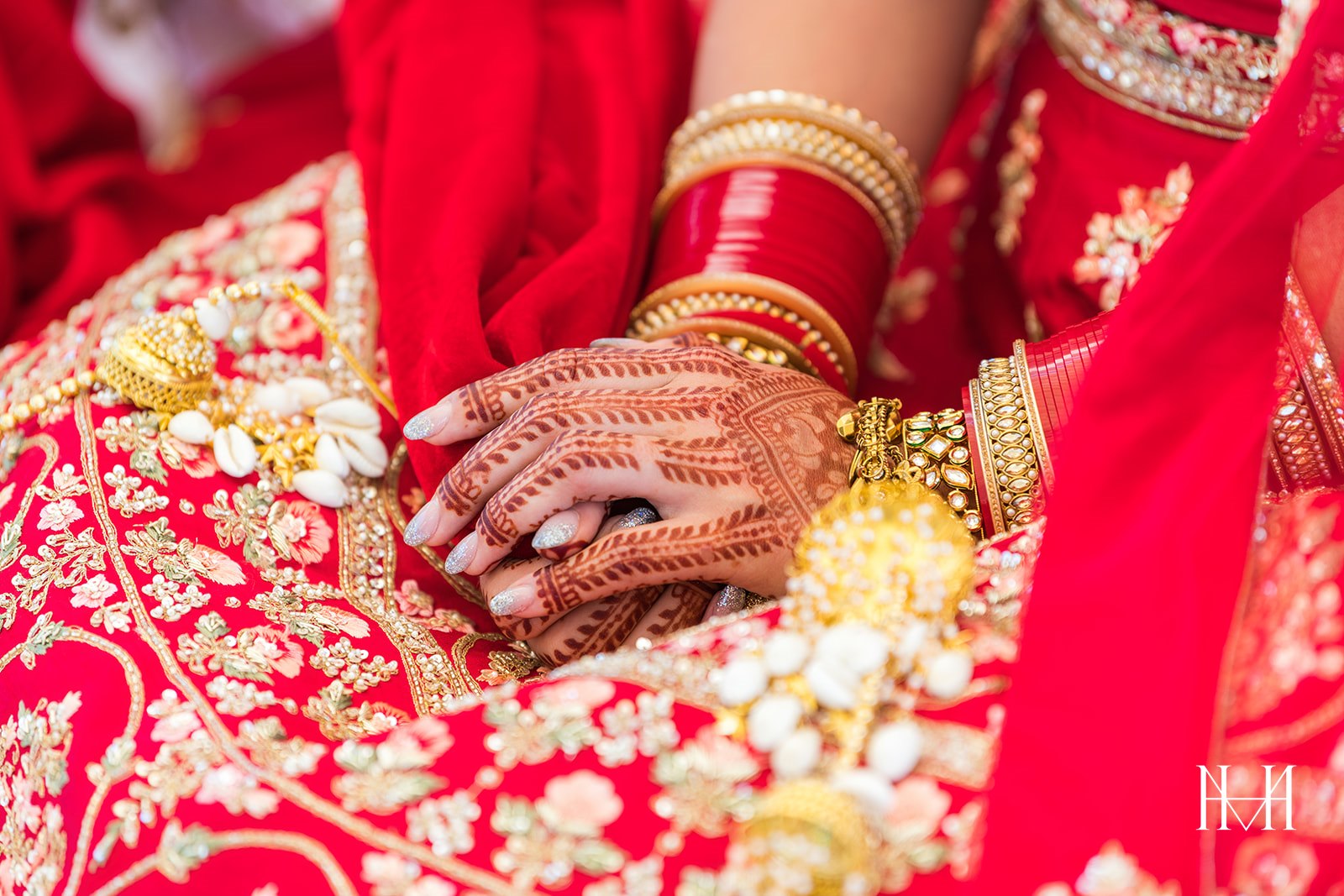
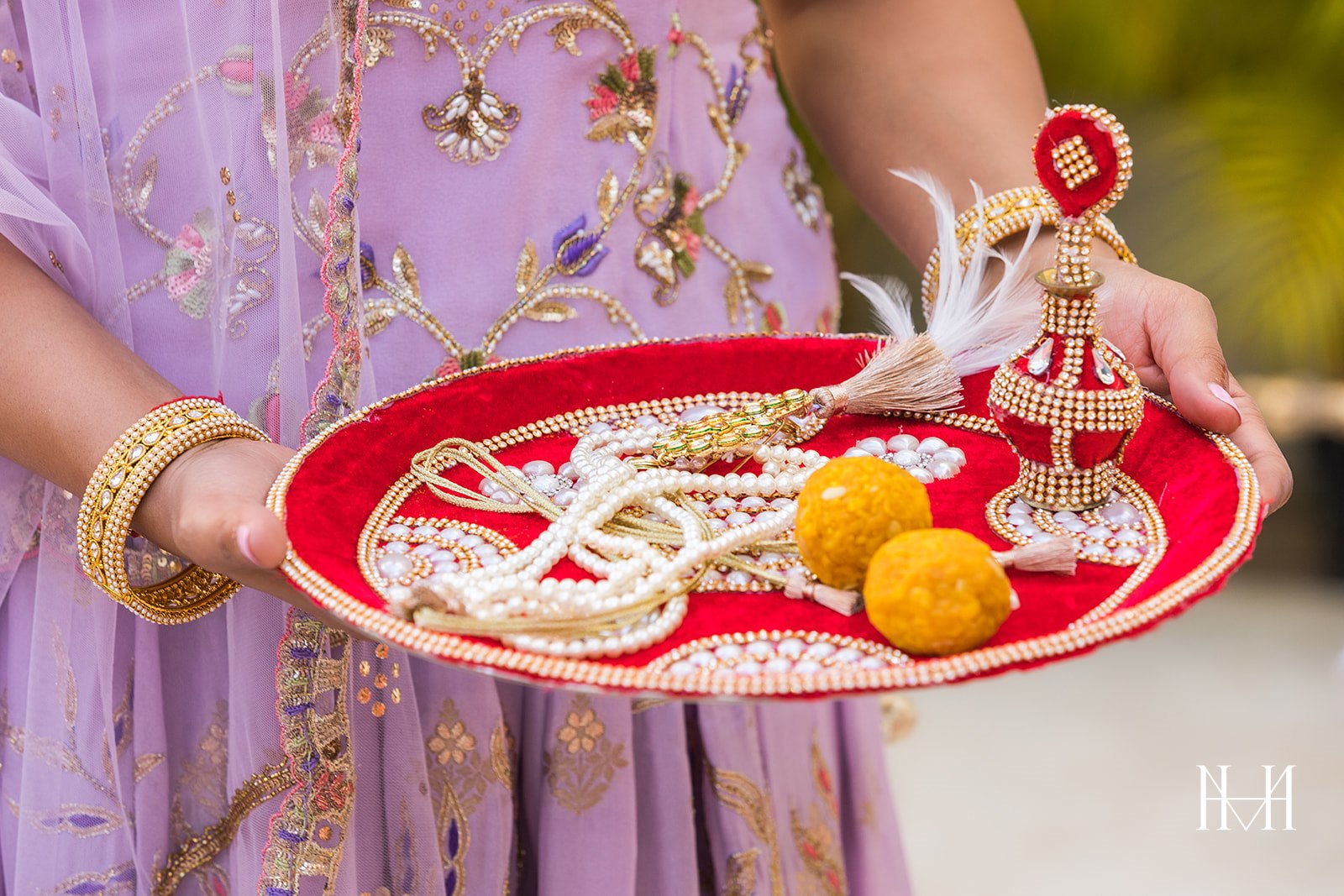
Mehndi and Chooda are often celebrated together. One partner’s hands and feet are adorned with beautiful henna designs, while their maternal relative presents them with red and white bangles dipped in milk. Golden ornaments (Kalires) are tied to the bangles, and similar to a Christian bouquet toss, the partner showers friends with Kalires, predicting who will be married next.
Maiya is a Sikh wedding ritual where the couple refrains from leaving their homes the day before the wedding.
Gana involves tying a red thread around the couple’s wrists, considered sacred and meant to protect them from bad omens.
Vatna (also called Maiyan) resembles the Hindu Haldi Ceremony, where a paste of turmeric powder and mustard oil is applied to the couple for blessings.
Gharoli features holy water brought from the Gurudwara in an earthen pot, traditionally delivered by the couple’s siblings. This water is used for a holy bath before the wedding.
Wedding Day Rituals
Baraat is the lively procession where one partner, dressed in wedding attire, arrives at the venue accompanied by friends and family, celebrating with song and dance.
Milni is the welcoming ceremony where family members greet the couple as they arrive at the wedding venue. Garlands are exchanged, and gifts are presented, symbolizing the joining of families.
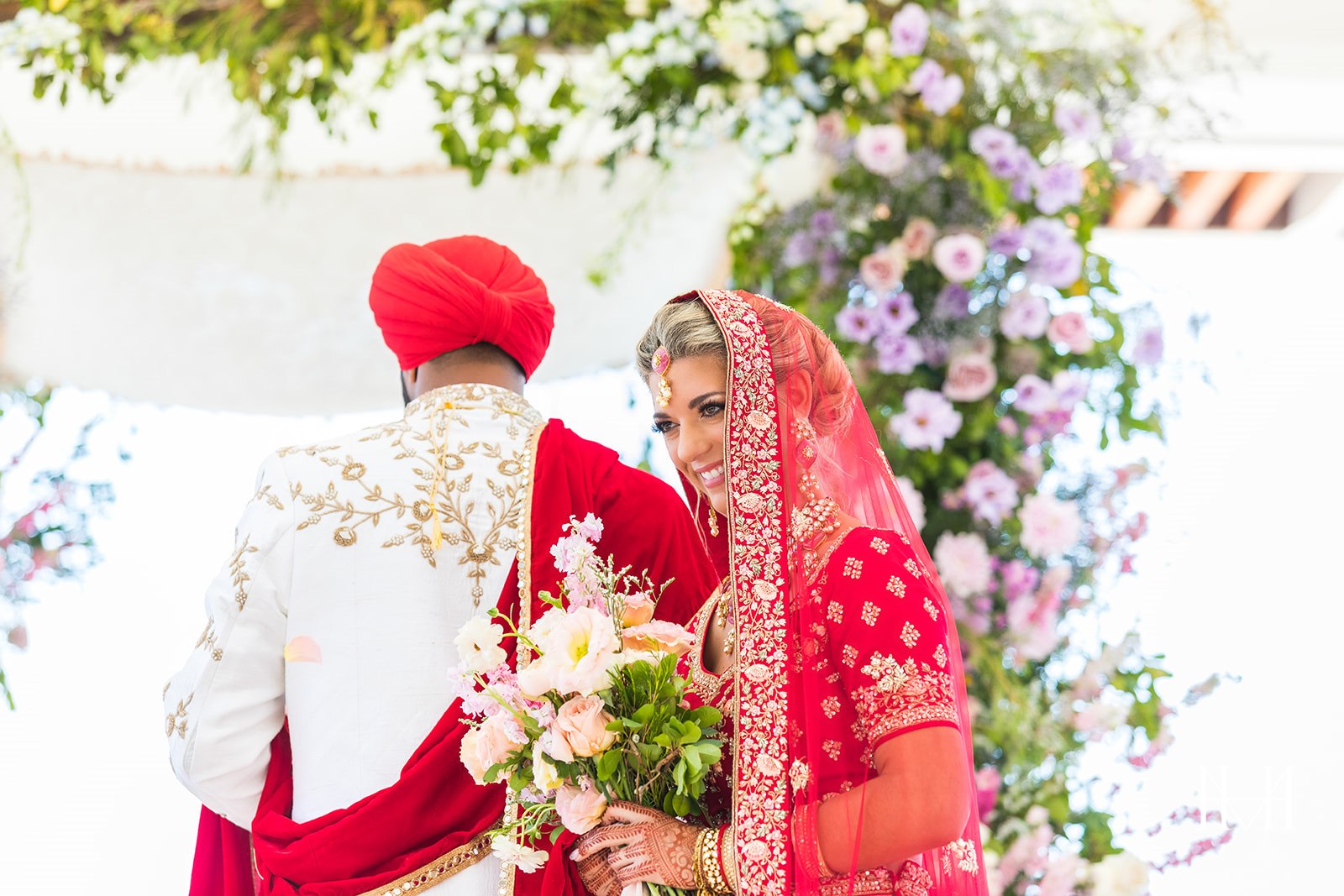
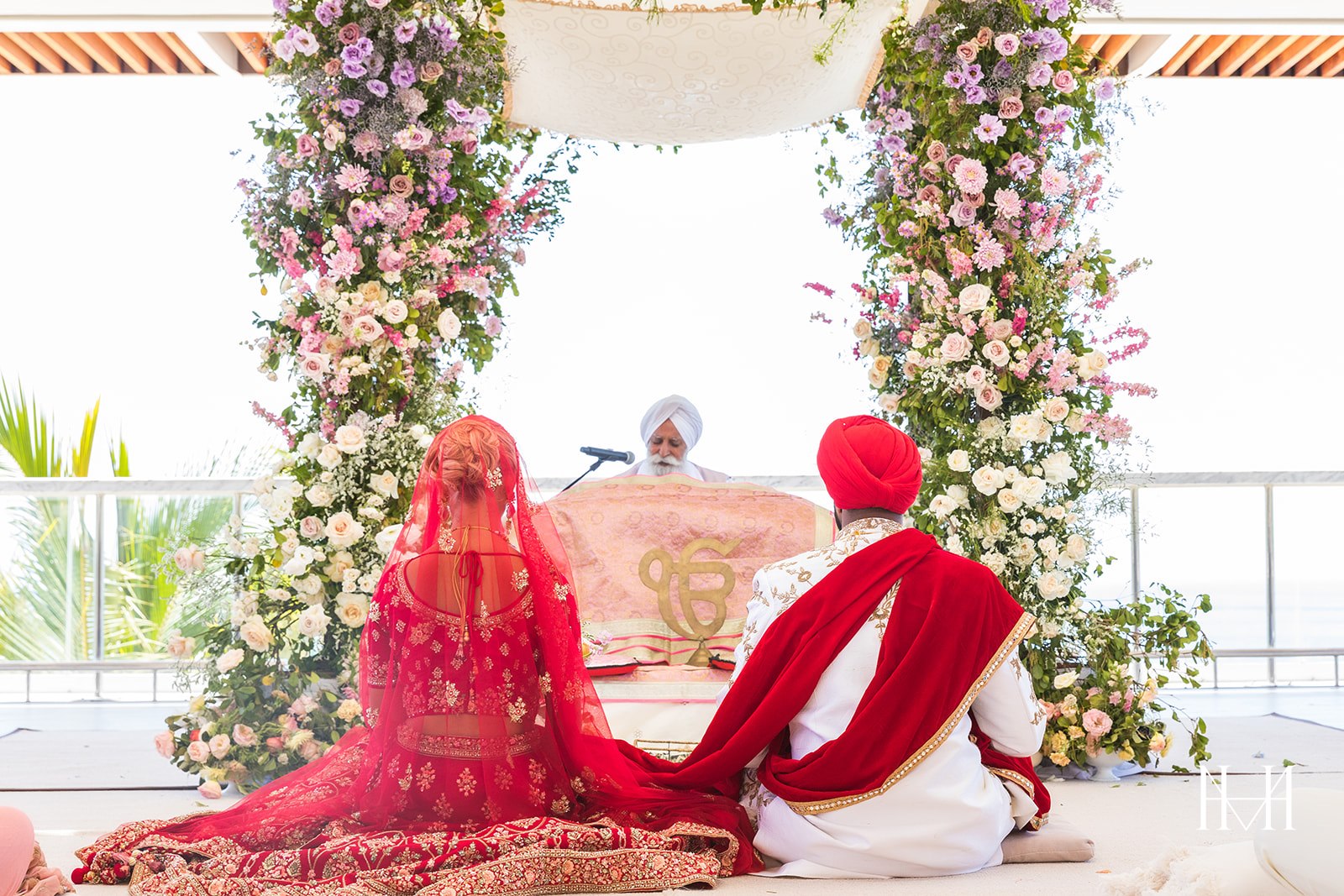
Anand Karaj, meaning “blissful union,” is the Sikh wedding ceremony. Families gather in the Gurudwara to attend the Kirtan, where religious songs are sung. The holy Guru Granth Sahib is brought out, and the priest recites Ardas (prayers) as the couple sits before it.
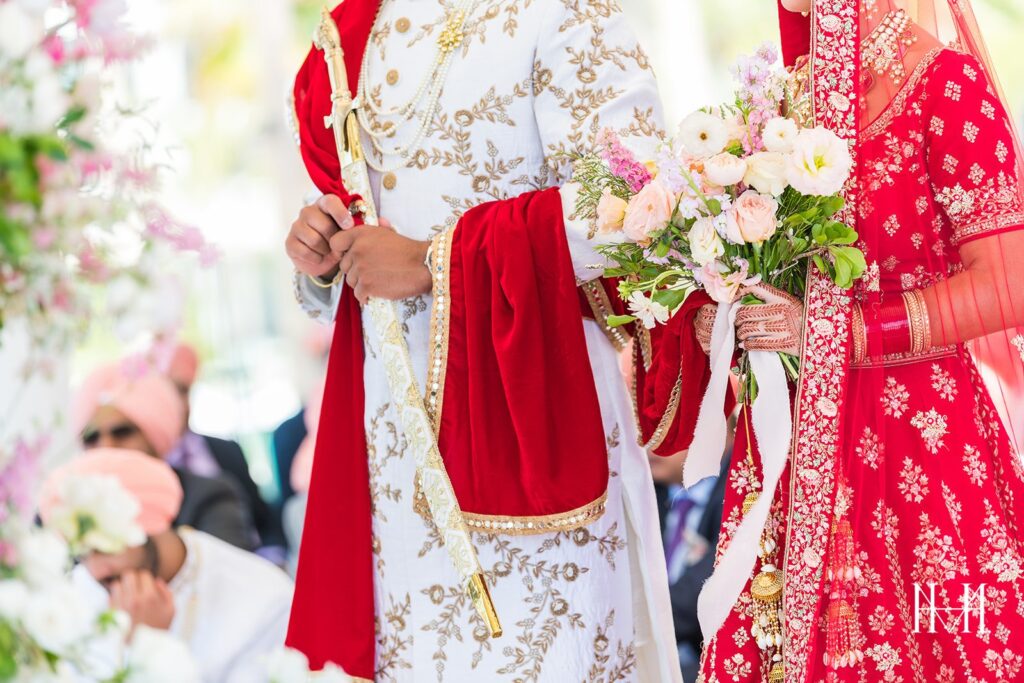
Laavan Pheras, or “Four Prayers that Seal the Marriage,” involves the couple taking rounds around the Guru Granth Sahib while the Laavan is chanted. Their garments are tied together as a symbol of unity, and one partner typically leads the rounds, holding a sword (Kirpan). Garlands are exchanged, signifying their marriage.
Karah Prasad is a ceremonial sweet shared with guests, prepared by the priest or the couple’s family, and considered blessed and holy.
Post Events
Reception is a lively celebration for the newlyweds, featuring food, drinks, and entertainment.
Doli refers to the traditional way of escorting the couple to their new home in a wooden structure. During this farewell, the partner tosses rice over their shoulder as a gesture of gratitude toward their family for raising them.
Pag Phere involves the couple visiting one partner’s family home after the wedding, where they receive a warm welcome, gifts, and a sumptuous meal.
Denise Lillie Engagements Sikh Fusion Weddings Portfolio