

While couples of Muslim faith can be found throughout South Asia, here are some of the most common traditions by most popular regions.
Afghanistan ~ Pakistan ~ Maldives
MANJH & MEHNDI
In Muslim weddings, pre-wedding celebrations are filled with vibrant traditions, and two prominent ceremonies are Manjha and Mehndi. The Manjha ceremony, also known as the Uptan or Mayon, is a joyous occasion in which the couple is adorned with Haldi paste made from sandalwood and rose water. This ritual serves as a blessing, symbolizing beauty and good fortune as the couple prepares for their wedding.
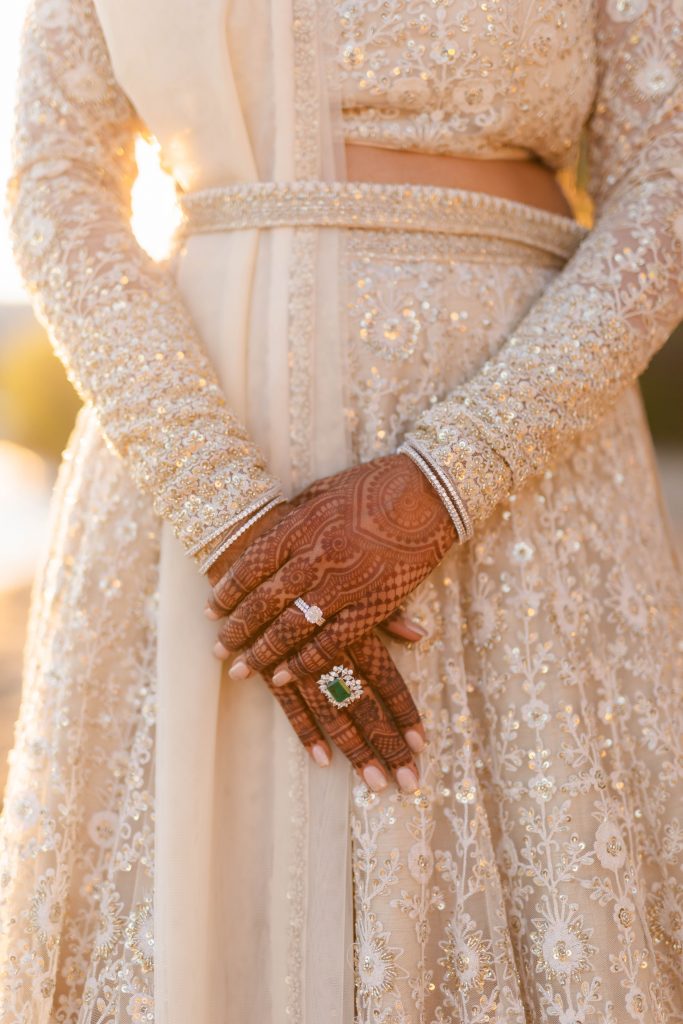
Following the Manjha, the Mehndi ceremony showcases the artistic beauty of intricate Arabic mehndi designs applied to one partner’s hands and feet. This colorful event typically takes place a day before the wedding and is filled with laughter and celebration. The application of mehndi is not only a form of body art but also carries cultural significance, as it is believed to bring prosperity and happiness to the couple.
These pre-events are essential in Muslim weddings and set the stage for the joyous nuptials that follow. By understanding these cherished traditions, couples can ensure their wedding embodies the rich culture and significance of their heritage.
WEDDING DAY
Understanding the Nikah/Nikkah Ceremony and Related Traditions
Baraat is the celebratory wedding procession on the day of the Nikah/Nikkah ceremony. One member of the couple enters the wedding venue accompanied by family and friends, dancing to the lively beats of the dhol walas. This joyous procession typically arrives at the partner’s house or chosen wedding venue.
Modern-day Nikah/Nikkahs feature the couple seated opposite each other, often separated by a decorative curtain made of netting, floral arrangements, or rich fabrics.
The Signing of the Nikahnama is an important ritual where the wedding officiant, or Qazi, recites verses from the Holy Quran. The couple accepts their vows by stating “Qabool hai” three times in affirmation. This ritual is known as “Ijab-e-Qabool.” The fathers (walises) or brothers of the couple are present during this significant moment. Following this, they gaze at one another as they proceed to sign the Nikahnama (the Muslim marriage contract), which outlines their individual responsibilities. Once signed, the couple is officially bound in holy matrimony according to Islamic traditions. Typically, one member of the couple signs the Nikahnama first, followed by the other partner who has the final say in the Nikah.
The Mirror Ceremony follows the signing of the Nikahnama. The couple sits beside each other with a decorative dupatta draped over their heads. Although they are seated together, they can only see each other via mirrors, with a copy of the Quran placed between them. Guided by the Maulvi, they read Muslim prayers, further sealing their bond.
Rukhsati, or the vidaai ceremony, marks the farewell of one partner to their family, stepping into a new life with their spouse. The holy book is held above their head as they arrive at their new home, welcomed by their mother-in-law, who bestows blessings from the Almighty.
POST EVENTS
The Walima, or Dawat-e-Walima, is the reception hosted by the a partners family after the traditional wedding. It serves as a celebration of the couple’s union, allowing family and friends to gather and share in the joy of the newlyweds.

Muslim > Afghanistan
PRE EVENTS
Celebrating Afghan Muslim Weddings
In Afghan Muslim weddings, the Shirini ceremony marks the moment when a member of the couple’s family formally accepts the marriage proposal. When this occurs, a Khimcha and Dismal are traditionally sent. The Khimcha is a beautifully decorated tray filled with sweets and toffees, adorned with flowers and ribbons, while the Dismal is a decorative cloth signifying the acceptance of a new family member.
The Sher E Nore Khore is the engagement party traditionally hosted by one side of the couple’s family, inviting friends and relatives to celebrate. This gathering allows the couple to get to know each other more intimately and strengthens family ties.
Following the engagement party, Khina Night, or Henna Night, takes place. During this celebration, one member of the couple wears traditional Afghan clothing, while the other has intricate henna designs applied to their hands, symbolizing beauty and joy as they prepare for their union.
Rukhsati is a significant moment where one partner leaves their family to join the other’s family. Traditionally, a green cloth is tied around their waist during this emotional farewell. This event can take place a few days before the wedding or alongside the Nikah, depending on the couple’s preference.
CEREMONY
The Nikah is the religious ceremony where both families agree on the marriage contract. This event takes place during the day, in the presence of the couple’s immediate family and the mullah (Islamic clergy). For attire, one member of the couple wears green clothing at the Nikah and after the ceremony change into white garments. The other member of the couple wears a suit.
The Wedding Ceremony typically begins in the evening hours and ends at 2:00 am. A group of women stand on the right, and a group of men stand on the left to greet guests to their tables. A special song is played called the “Ahesa Boro” to commemorate the arrival of the one member of the couple and is a Wedding March that plays until the couple reach their seats. A feast is served with traditional Afghan foods such as shohla e goshtee, chalou, palou, and kabobs. Traditional desserts include baklava and firnee served with fruits. The ceremony ends with everyone participating in the Attan dance, after the dance everyone goes on to their homes.
POST EVENTS
Nashtaye is where one member of the couple’s family brings breakfast or lunch at the other’s home, typically the morning after the wedding. The meal comprises very delicious cuisines from Afghanistan.
Takhjami is usually celebrated one week after the wedding ceremony. The guests greet, give gifts, and wish the couple well in their new life. At this time, the new member of the couple becomes a full family member of the other’s family and not just a guest. They come with all the items they needs to start their life in the new home (these items may include bed-sheets, clothes, home accessories, etc.)
Muslim > Pakistan
PRE EVENTS
Dohlki is a small gathering of family and friends of the couple before the wedding ceremony (sometimes a couple days or a couple weeks prior). The room is furnished with decorative rugs and throw pillows, while everyone gathers on the floor in a circle to sing wedding songs on the beat of a Dholak (a two-headed hand drum).
Mayun is where the (typically female) family members, cousins, and friends of the couple gather to perform rituals. These rituals include putting oil on the hair of the couple, and applying ubtan (a face mask of turmeric, gram flour, sandalwood powder, rosewater, and milk) to their face. The rituals signify the couple’s preparation for their wedding and are believed to enhance their beauty. The couple is not permitted to leave their home as it is considered a bad omen.
Mehndi Night is an evening filled of music, dance, and henna. Typically a traditional yellow mehndi dress or a brightly coloured shalwar kameez is worn.
CEREMONY
Nikkah Ceremony is the signing of the legal marriage contract between the couple. Two witnesses from each side must be present. Usually in attendance is the families of the couple and their close friends, as it is traditionally a small intimate event.
The Barat takes place after the Nikkah. Traditionally, this is where one member of the couple, their family, and friends come to take the new member of the couple away. This is organized by one side of the couple’s family and can include arrangements for a reception hall, food, and photography. Typically for attire, a sherwani and traditional anarkarli lehenga is worn to the Baraat.
Rukhsati is one member of the couple being given away by their parents with the Holy Quran over their head to signify that they are being sent away with Allah’s blessing and protection.
POST EVENTS
The Valima is an event arranged by one member of the couple to celebrate the marriage and symbolize happiness within the household. This reception typically takes place the next day following the Barat (or even a few days after as per the convenience of both families). For attire, a suit and a sharara dress are worn in a pastel color.
Muslim > The Maldives
CEREMONY
In the Maldives, a traditional wedding ceremony is marked by the vibrant Bodu Beru procession, featuring around 20 drummers in traditional attire. This lively procession accompanies the happy couple as they make their way down the aisle, adding a joyous ambiance to the wedding.
The ceremony is presided over by a local gazi (judge), who conducts the proceedings in the native Divehi dialect, emphasizing the cultural significance of the event. Many couples who choose the traditional route also opt to wear exquisite Maldivian clothing, further embracing the local customs.
For those seeking a more contemporary celebration, Western-style weddings are also welcome, allowing couples to bypass cultural elements if they prefer. However, many Maldivian resorts that offer wedding packages often include Bodu Beru drummers as a highlight, reminding both the couple and their guests that they are celebrating in a stunning destination.